Owings Mills, MD · Baltimore County
Basement Water Removal in Owings Mills, MDBasement Wall Drying & Basement Dehumidification
Basement Water Removal in Owings Mills includes basement water pump out, basement drying services and basement moisture inspection.
Answered 24/7
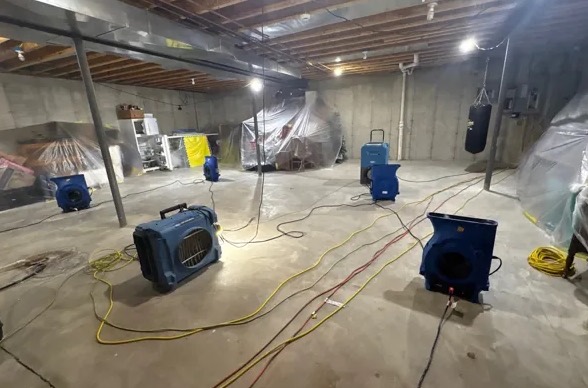
Basement Water Removal Solutions for Owings Mills Homeowners
A basement that looks dry a day after a flood in Owings Mills can still hold a lot of water in the slab, the bottom of the walls and under flooring. That hidden water causes the musty smell many basements have.
Homeowners in Owings Mills can call (410) 862-3857 day or night when the basement is taking on water. Service also covers Randallstown, Milford Mill and Pikesville, with the same pumping and drying steps.
Professional Basement Water Removal Offerings
Basement Wall Drying
Basement walls are checked with moisture meters. Wet drywall is cut back above the water line, and insulation behind it is removed.
Basement Dehumidification
After drying, a household dehumidifier may still be needed to keep basement humidity in a healthy range.
Sump Pump Failure Water Cleanup
Cleanup after a sump failure includes drying the area around the pit and noting whether the pump, switch or power was the cause.
Emergency Basement Flooding
A flooded basement threatens the furnace, water heater and anything stored on the floor. Fast pumping protects what can still be saved.
Basement Water Pump Out
Pumping starts once power to the basement is safe. Deep water goes first, then extractors handle the thin layer left on the floor.
Indicators You Need Professional Water Removal
Gurgling Sounds From Drains
Gurgling floor drains or slow drains can be an early sign of a sewer line problem.
Standing Water in Basement
Standing water anywhere on the basement floor needs to be pumped out before it soaks the walls.
Musty Odors and Mold Smell
A musty or damp smell in the basement points to wet materials hidden somewhere in the space.
Water Stains on Walls or Ceiling
Stains on lower walls or the ceiling below a bathroom or kitchen point to a leak.
How Basement Water Removal Works in Owings Mills
Step 1: Source Control and Water Pump Out
The leak is shut off and standing water is pumped out, starting at the lowest point.
Step 2: Water Extraction
Extractors pull water from carpet, pad and concrete, and wet vacs clear corners and stairs.
Step 3: Dehumidification and Drying
Large dehumidifiers and air movers dry walls, framing and slab over several days.
Step 4: Inspection and Clearance for Repair
Final readings confirm the basement is dry and ready for drywall and flooring repairs.
Common Causes of Basement Water Damage in Owings Mills
Improper Landscape Grading
Soil that slopes toward the house directs rainwater straight to the basement walls.
Foundation Cracks and Seepage
Cracks in foundation walls and the slab let groundwater seep in during wet weather.
Sump Pump Malfunction or Power Loss
A sump pump that fails mechanically or loses power during a storm lets groundwater rise.
Window Well Leaks and Drainage
Window wells without drains or covers fill with rain and leak through the windows.
Residential and Commercial Basement Water Removal in Owings Mills
Residential Basement Water Removal
Finished basements used as bedrooms or family rooms need careful moisture checks behind walls and under flooring, since that is where water hides.
Commercial Basement Water Removal
Businesses with below-grade storage need wet inventory moved out and documented. Drying is planned around daily operations wherever possible.
Professional Basement Water Removal Versus Do-It-Yourself
Do not step into basement water if cords, outlets or appliances are in it. Shut off power at the panel only if you can reach it from a dry spot, then call (410) 862-3857.
Factors Affecting Basement Water Removal Cost
The cost of basement water removal in Owings Mills depends on how deep the water is, what type of water it is and how much finished material has to come out.
Additional Services
Antimicrobial treatment, contents cleaning and repairs after drying add to the cost.
Time of Service
Night, weekend and storm calls can cost more than a scheduled weekday visit.
Basement Square Footage
Larger basements need more extraction, more drying equipment and more days of drying.
Does Insurance Cover Basement Water Removal?
Photograph the water level, damaged belongings and appliances before cleanup, and keep receipts for emergency pumping and drying equipment for your adjuster.
Benefits of Hiring Local Pros for Basement Water Removal in Owings Mills
Moisture Inspection
Meters and thermal cameras find water in walls, floors and slab that looks dry.
24/7 Emergency Response
Help is available day or night when water is rising in the basement.
Clear Communication
You get plain updates on what was found, what was removed and how drying is going.
Emergency Basement Flood Response in Owings Mills
The faster a basement is pumped out, the more can be saved. Call (410) 862-3857 for basement water removal in Owings Mills as soon as you see water.
Call Now (410) 862-3857Basement Water Removal Near Owings Mills: Areas Served
Help with basement water removal reaches Randallstown, Milford Mill and Pikesville, plus other communities around Owings Mills, for finished and unfinished basements alike.
- Basement Water Removal in Randallstown
- Basement Water Removal in Milford Mill
- Basement Water Removal in Pikesville
- Basement Water Removal in Reisterstown
- Basement Water Removal in Lochearn
- Basement Water Removal in Mays Chapel
- Basement Water Removal in Cockeysville
- Basement Water Removal in Lutherville
- Emergency Damage Restoration in 21117
- Storm Damage Restoration in 21117
- Water Damage Restoration in 21117
- Water Extraction Service in 21117
- Water Leak Detection in 21117
- Water Removal Service in 21117
Basement Water Removal FAQs
Why is basement dehumidification important after pumping?
Walls and concrete keep releasing moisture for days. Dehumidifiers remove it so the basement does not stay damp.
Is a sump pump failure an emergency?
Yes, especially during rain. Groundwater can rise quickly once the pump stops, flooding the floor and finished rooms.
How is contaminated water handled in a basement?
With protective gear, containment, removal of porous materials and disinfection of hard surfaces before drying.
Can I dry my basement myself with fans?
Fans help with surface water, but walls and concrete need dehumidifiers and readings to dry fully.
What is involved in basement water removal?
Making power safe, pumping out standing water, extracting floors and carpet, removing soaked materials and dehumidifying until dry.