Randallstown, MD · Baltimore County
Basement Water Removal in Randallstown, MDBasement Wall Drying & Emergency Basement Flooding
Get basement water removal in Randallstown for emergency basement flooding, basement water pump out and basement floor water damage.
Answered 24/7
Reliable Basement Water Removal Near Randallstown, Maryland
A basement that looks dry a day after a flood in Randallstown can still hold a lot of water in the slab, the bottom of the walls and under flooring. That hidden water causes the musty smell many basements have.
Homeowners in Randallstown can call (410) 862-3857 day or night when the basement is taking on water. Service also covers Milford Mill, Owings Mills and Lochearn, with the same pumping and drying steps.
The Basement Water Removal Process in Randallstown
Basement Wall Drying
Basement walls are checked with moisture meters. Wet drywall is cut back above the water line, and insulation behind it is removed.
Emergency Basement Flooding
Emergency response starts with making power safe, stopping the source if possible and pumping out the water.
Basement Drying Services
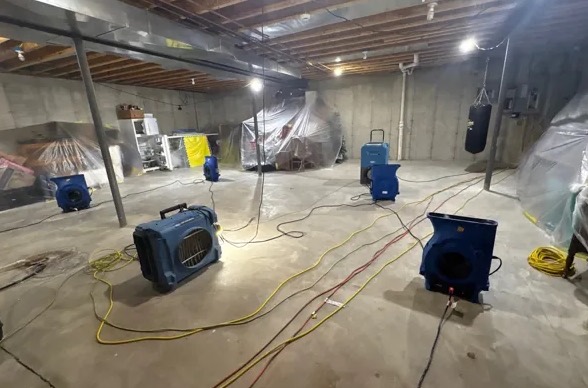
After pumping, air movers and dehumidifiers dry the walls, framing and slab. Readings are taken daily until every surface is back to normal.
Basement Floor Water Damage
Concrete floors are squeegeed, extracted and dried with airflow and dehumidifiers until moisture readings drop.
Basement Dehumidification
After drying, a household dehumidifier may still be needed to keep basement humidity in a healthy range.
Indicators You Need Professional Water Removal
High Humidity and Condensation
Water on pipes and windows, or a constantly clammy feel, means basement humidity is too high.
Soggy or Wet Carpeting
Carpet that feels damp or smells sour is holding water in the pad against the concrete.
Wet or Damp Basement Walls
Basement walls that look dark, feel damp or show tide lines are taking on or holding water.
Gurgling Sounds From Drains
Gurgling floor drains or slow drains can be an early sign of a sewer line problem.
How Basement Water Removal Works in Randallstown
Step 1: Safety Assessment and Pump Out
Electrical hazards are checked, then deep water is pumped outside away from the foundation.
Step 2: Content Removal and Damage Documentation
Wet belongings are moved, and photos record the water level and damaged materials.
Step 3: Targeted Water Removal and Drying
Carpet is extracted, wet drywall is cut back and air is aimed at walls and the slab.
Step 4: Sanitization and Moisture Control
Surfaces touched by dirty water are disinfected, and dehumidifiers keep humidity low.
Why Basements Flood in Randallstown
Sewer Line Backups and Blockages
A blocked sewer line can push wastewater up through basement floor drains and toilets.
Appliance Malfunctions and Overflows
Washers, utility sinks and water softeners in the basement can overflow or leak.
High Water Table and Hydrostatic Pressure
A high water table presses groundwater against the slab and walls, forcing it inside.
Clogged or Damaged Gutters
Clogged gutters and short downspouts dump roof water right next to the foundation.
Both Residential & Commercial Basement Water Removal
Residential Basement Water Removal
Older homes with a basement may see seepage with every heavy storm. Water removal handles the current damage, and the entry point is noted for a waterproofing contractor.
Commercial Basement Water Removal
Multi-unit buildings with shared basements need each storage and laundry area pumped, dried and documented for the property manager.
Basement Water Removal vs. DIY: When to Call the Pros
A small puddle on bare concrete can be handled with a wet vac, towels and a dehumidifier. Call local water extraction experts if water reached carpet, drywall or framing, or covers much of the floor.
Basement Water Removal Cost in Randallstown, MD
The pros look at water depth, water type and basement finishes before pricing basement water removal in Randallstown, then explain the scope.
Affected Materials
Finished walls, carpet and laminate take more removal work than bare concrete.
Time of Service
Night, weekend and storm calls can cost more than a scheduled weekday visit.
Basement Square Footage
Larger basements need more extraction, more drying equipment and more days of drying.
Does Insurance Cover Basement Water Removal?
Flooding from outside water usually needs separate flood insurance. Water from a broken pipe or appliance inside is more often covered.
Advantages of Local Basement Water Removal Experts
Clear Communication
You get plain updates on what was found, what was removed and how drying is going.
Industry Drying Standards
Water removal and drying follow industry water damage standards, with readings at every visit.
24/7 Emergency Response
Help is available day or night when water is rising in the basement.
Emergency Basement Water Removal Available 24/7
Standing water in a basement soaks walls and floors by the hour. Call (410) 862-3857 for basement water removal in Randallstown at any time, day or night.
Call Now (410) 862-3857Basement Water Removal Serving Randallstown and Surroundings
Need basement water removal outside Randallstown? Service also covers Milford Mill, Owings Mills and Lochearn, including emergency help during storms.
- Basement Water Removal in Milford Mill
- Basement Water Removal in Owings Mills
- Basement Water Removal in Lochearn
- Basement Water Removal in Pikesville
- Basement Water Removal in Woodlawn
- Basement Water Removal in Reisterstown
- Basement Water Removal in Catonsville
- Basement Water Removal in Mays Chapel
- Emergency Damage Restoration in 21133
- Storm Damage Restoration in 21133
- Water Damage Restoration in 21133
- Water Extraction Service in 21133
- Water Leak Detection in 21133
- Water Removal Service in 21133
Frequently Asked Basement Water Removal Questions
How does a basement moisture inspection work?
Moisture meters and thermal cameras check walls, floors and the slab, including behind finished walls and under flooring.
What is the difference between a pump out and extraction?
A pump out removes deep standing water. Extraction pulls the remaining water from carpet, pad and floors.
Is a sump pump failure an emergency?
Yes, especially during rain. Groundwater can rise quickly once the pump stops, flooding the floor and finished rooms.
What is involved in basement water removal?
Making power safe, pumping out standing water, extracting floors and carpet, removing soaked materials and dehumidifying until dry.
Why is basement dehumidification important after pumping?
Walls and concrete keep releasing moisture for days. Dehumidifiers remove it so the basement does not stay damp.