Waldorf, MD · Charles County
Basement Water Damage Restoration in Waldorf, MDBasement Drying Services & Basement Water Extraction
Basement Water Damage Restoration in Waldorf runs from basement water extraction and basement floor water removal to basement dehumidification.
Answered 24/7
Basement Water Damage Restoration for Waldorf Homes
In Waldorf, a damp, musty basement or lower room often means water damage that was never fully dried. Old leaks can leave moisture in walls and under flooring long after the water is gone.
Homeowners in Waldorf can call (410) 862-3857 day or night when water is rising in the basement. Service also covers Clinton, Fort Washington and Oxon Hill, with the same pumping and drying steps.
Basement Water Damage Restoration Services in Waldorf
Basement Drying Services
Equipment is adjusted each day based on moisture readings until every material reaches its normal level.
Basement Water Extraction
Basement water is removed before drying starts, because every gallon left behind keeps the walls and air damp.
Basement Sewer Backup Cleanup
Porous materials touched by sewage, such as carpet, pad and lower drywall, are removed. Concrete and framing are cleaned and disinfected.
Basement Mold Prevention
After drying, an antimicrobial can be applied to framing and concrete that were wet, to slow mold on surfaces that stay in place.
Basement Wall Drying
Wet drywall is cut back above the water line when it is soaked, and the wall cavity and insulation behind it are dried or replaced.
How to Know You Need Basement Water Damage Restoration in Waldorf
Sewage Odors or Backups
Sewage smells or water coming up through a floor drain mean the sewer line is backing up.
Condensation on Windows or Pipes
Water beading on cold pipes or basement windows shows high humidity that keeps materials damp.
Rusted Appliances or Pipes
Rust on the water heater, furnace base or pipes points to repeated moisture or past flooding.
Damp or Musty Odors
A damp, earthy or musty smell in the basement often means hidden moisture in walls, carpet or the slab.
How Basement Water Damage Restoration Works in Waldorf
Step 1: Water Removal
Pumps and extractors remove standing water from the basement floor, starting at the lowest point.
Step 2: Targeted Moisture Evaporation
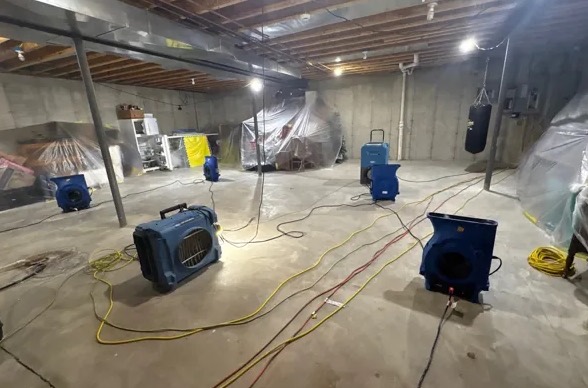
Air movers are aimed at wet walls, framing and the slab to speed evaporation.
Step 3: Humidity Control
Large dehumidifiers pull moisture from the basement air, with readings checked every day.
Step 4: Final Verification and Restoration
Final readings confirm the basement is dry, and the space is ready for drywall and flooring repairs.
Typical Sources of Basement Water Damage in Waldorf
High Water Table and Hydrostatic Pressure
A high water table pushes groundwater up through the slab and into the joints between wall and floor.
HVAC Condensate Line Overflow
A clogged furnace or air conditioner condensate line can overflow onto the floor of a basement or lower-level utility room.
Failed or Clogged Drain Tile
Clogged or collapsed drain tile around the foundation lets water build up against the walls.
Sewer Line Backups
A blocked or overloaded sewer line pushes wastewater up through basement drains and toilets.
Home and Business Basement Water Damage Restoration in Waldorf
Residential Basement Water Damage Restoration
In homes, a flooded basement often means damaged carpet, drywall, a furnace or water heater and stored belongings. Water is pumped out, contents are moved and the space is dried.
Commercial Basement Water Damage Restoration
In commercial buildings, basements hold mechanical rooms, storage and sometimes offices. Water is removed and equipment areas are dried so systems can be checked and restarted.
Basement Water Damage Restoration: Professional Help vs. Doing It Yourself in Waldorf
Do not walk into standing basement water if outlets, cords or appliances are submerged. Shut off power at the panel if you can reach it safely, then call (410) 862-3857.
Understanding Basement Water Damage Restoration Pricing in Waldorf
Sewage cleanup, finished walls, storm-night calls and damaged appliances all add to the total for basement water damage restoration in Waldorf.
Dehumidification Needs
Large dehumidifiers may need to run longer in below-grade spaces than in upper floors.
Water Category
Clean water costs less to handle than sewage, which needs protective gear, removal and disinfection.
Affected Square Footage
Larger basements need more extraction, more drying equipment and more days of drying time.
Does Insurance Cover Basement Water Damage Restoration?
Many homeowner policies cover sudden basement water from a burst pipe, but not seepage or groundwater. Sewer backup coverage is often a separate add-on, so check your policy.
The Value of Local Pros for Basement Water Damage Restoration in Waldorf
Advanced Moisture Detection
Moisture meters and thermal cameras find water in walls and slabs that looks dry.
Water Type Handling
Clean water, gray water and sewage are each handled with the right protection and removal steps.
Structural Integrity Assessment
Walls, stairs and framing are checked for damage before work begins in the basement.
Waldorf Emergency Basement Water Damage Restoration Response
Every hour of standing water in a basement means more drywall and flooring to replace. Call (410) 862-3857 for basement water damage restoration in Waldorf.
Call Now (410) 862-3857Regions Served for Basement Water Damage Restoration Near Waldorf
Besides Waldorf, local restoration pros handle basement pumping, drying and dehumidification in nearby Clinton, Fort Washington and Oxon Hill.
- Basement Water Damage Restoration in Clinton
- Basement Water Damage Restoration in Fort Washington
- Basement Water Damage Restoration in Oxon Hill
- Basement Water Damage Restoration in Camp Springs
- Basement Water Damage Restoration in Temple Hills
- Basement Water Damage Restoration in Alexandria
- Basement Water Damage Restoration in Suitland
- Basement Water Damage Restoration in Coral Hills
- Emergency Damage Restoration in 20601
- Storm Damage Restoration in 20601
- Water Damage Restoration in 20601
- Water Extraction Service in 20601
- Water Leak Detection in 20601
- Water Removal Service in 20601
- Emergency Damage Restoration in 20602
- Storm Damage Restoration in 20602
Frequently Asked Questions About Basement Water Damage Restoration
Is basement floor water removal different from carpet extraction?
Yes. Bare concrete is squeegeed and dried, while carpet and pad need extraction, and the pad is usually replaced.
What is involved in basement water damage restoration?
Pumping out water, removing soaked materials, cleaning contaminated areas, drying walls, framing and concrete, and dehumidifying until readings are normal.
What does below-grade moisture removal include beyond pumping?
Extracting carpet and pad, opening wet walls, running air movers and dehumidifiers, and checking readings until dry.
Does basement mold prevention need special steps after flooding?
Fast drying is the main step. Wood and concrete that stayed wet can be treated with an antimicrobial once dry.
Why is quick action important for below-grade flood restoration?
Basements dry slowly, so every hour of standing water adds days of drying and more material to replace.