Camp Springs, MD · Prince George's County
Basement Water Damage Restoration in Camp Springs, MDBasement Sewer Backup Cleanup & Basement Dehumidification
Basement Water Damage Restoration in Camp Springs includes emergency basement flood cleanup, basement sewer backup cleanup and basement wall drying.
Answered 24/7
Local Basement Water Damage Restoration Near Camp Springs
Basements collect water from every direction: rain seeping through walls, groundwater pushing up through the slab, sewage backing up through floor drains and pipes bursting overhead. In a Camp Springs home with a basement or below-grade room, any of these can leave inches of water on the floor.
Homes in Camp Springs and nearby Temple Hills, Oxon Hill and Suitland with basements deal with seepage, plumbing leaks and sewer backups. Help with basement water damage restoration covers pumping, removal of wet materials and drying of walls and concrete.
The Basement Water Damage Restoration Process in Camp Springs
Basement Sewer Backup Cleanup
Sewage that backs up through a floor drain or toilet is extracted with protective gear, and the area is contained from the rest of the house.
Basement Dehumidification
A basement with no moisture problem before the flood may still need a dehumidifier afterward while the concrete dries.
Emergency Basement Flood Cleanup
A flooded basement can damage furnaces, water heaters and stored items quickly. Fast pumping limits how much is lost.
Basement Mold Prevention
Keeping basement humidity low after drying helps prevent mold from returning, especially in finished spaces.
Basement Water Extraction
Basement water is removed before drying starts, because every gallon left behind keeps the walls and air damp.
Indicators for Basement Water Damage Restoration in Camp Springs
Mold on Surfaces
Dark spots on drywall, framing or stored boxes mean the area has stayed wet for days.
Condensation on Windows or Pipes
Water beading on cold pipes or basement windows shows high humidity that keeps materials damp.
Wet or Stained Basement Walls
Dark, wet patches or tide lines on basement walls show where water seeped in or wicked up.
Rusted Appliances or Pipes
Rust on the water heater, furnace base or pipes points to repeated moisture or past flooding.
How Basement Water Damage Restoration Works in Camp Springs
Step 1: Floodwater Pump-Out
Submersible pumps remove deep water, and electrical hazards are checked before anyone walks in it.
Step 2: Deep Moisture Extraction
Extractors pull water from carpet, pad and the concrete floor after the deep water is gone.
Step 3: Air Circulation and Drying
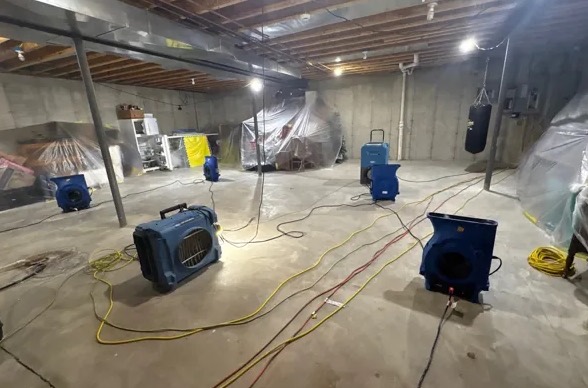
Air movers keep dry air moving across walls and floors throughout the basement.
Step 4: Dehumidification and Verification
Dehumidifiers run until humidity and material readings confirm the basement is dry.
What Causes Basement Water Damage Restoration in Camp Springs
Stormwater Runoff Into Lower Levels
Heavy rain running off hard ground or a sloped yard can pour down stairwells and under doors into below-grade rooms.
Clogged Floor Drains
A floor drain blocked by debris cannot carry off water from a leak or overflow, so it spreads across the basement floor.
Sump Pump Mechanical Failure
A sump pump that fails, loses power or is too small lets groundwater rise into the basement.
Failed or Clogged Drain Tile
Clogged or collapsed drain tile around the foundation lets water build up against the walls.
Home and Business Basement Water Damage Restoration in Camp Springs
Residential Basement Water Damage Restoration
Homeowners with older basements may have seepage that returns with each storm. Drying fixes the current damage, and the source is noted for a waterproofing contractor.
Commercial Basement Water Damage Restoration
Apartment and condo buildings with shared basements or lower levels may have laundry and storage below grade. Each area is extracted, dried and recorded for the building manager.
Basement Water Damage Restoration: Professional Help vs. Doing It Yourself in Camp Springs
Keeping gutters and downspouts clear and checking water heater and washer hoses are good DIY steps before storm season. Once water is on the floor, call (410) 862-3857.
Basement Water Damage Restoration Cost in Camp Springs, MD
Before pricing basement water damage restoration in Camp Springs, the pros check the water depth, the type of water and what the basement is finished with.
Material Saturation
Finished basements with carpet, drywall and insulation take more removal work than bare concrete.
Secondary Damage
Damage to furnaces, water heaters and belongings adds repair and replacement costs.
Emergency Service
Night, weekend and storm calls can cost more than a scheduled visit.
Does Insurance Cover Basement Water Damage Restoration?
Many homeowner policies cover sudden basement water from a burst pipe, but not seepage or groundwater. Sewer backup coverage is often a separate add-on, so check your policy.
Advantages of Hiring Local Pros in Camp Springs for Basement Water Damage Restoration
Advanced Moisture Detection
Moisture meters and thermal cameras find water in walls and slabs that looks dry.
Detailed Documentation
Photos, readings and drying logs are kept to support your insurance claim.
Mold Prevention Focus
Fast drying is the main way to limit microbial growth in a below-grade space.
Round-the-Clock Emergency Basement Water Damage Restoration in Camp Springs
Sewage coming up through a floor drain? Stop using water in the house and call (410) 862-3857 now for basement water damage restoration in Camp Springs.
Call Now (410) 862-3857Regions Served for Basement Water Damage Restoration Near Camp Springs
Besides Camp Springs, local water damage pros handle basement pumping, drying and dehumidification in nearby Temple Hills, Oxon Hill and Suitland.
- Basement Water Damage Restoration in Temple Hills
- Basement Water Damage Restoration in Oxon Hill
- Basement Water Damage Restoration in Suitland
- Basement Water Damage Restoration in Clinton
- Basement Water Damage Restoration in Forestville
- Basement Water Damage Restoration in Fort Washington
- Basement Water Damage Restoration in Coral Hills
- Basement Water Damage Restoration in Walker Mill
Frequently Asked Questions About Basement Water Damage Restoration
Does basement mold prevention need special steps after flooding?
Fast drying is the main step. Wood and concrete that stayed wet can be treated with an antimicrobial once dry.
How long does below-grade drying take after a flood?
Often several days or longer, since concrete and cool basement air dry slowly. Daily readings show progress.
How is basement sewer backup cleanup different from regular flooding?
Sewage carries bacteria, so it needs protective gear, removal of porous materials and disinfection before drying.
What health risks come with delayed basement flood cleanup?
Standing water and wet materials can support bacteria and microbial growth, and sewage carries contaminants that need disinfection.
What is involved in basement water damage restoration?
Pumping out water, removing soaked materials, cleaning contaminated areas, drying walls, framing and concrete, and dehumidifying until readings are normal.