Camp Springs, MD · Prince George's County
Basement Water Removal in Camp Springs, MDEmergency Basement Flooding & Basement Dehumidification
After a burst pipe or storm, Basement Water Removal in Camp Springs means basement water pump out, basement wall drying and basement drying services.
Answered 24/7
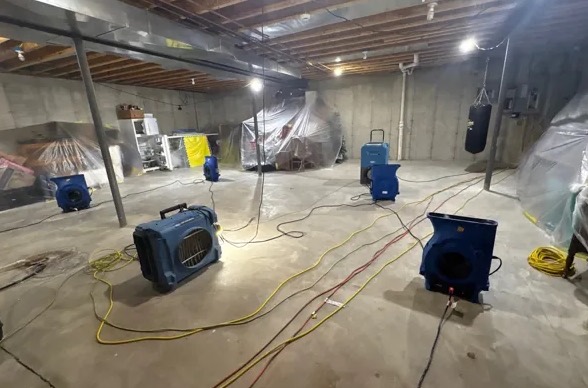
Reliable Basement Water Removal Near Camp Springs, Maryland
In Camp Springs, a finished basement or lower level takes more work after a flood. Carpet, pad, laminate, drywall and insulation all trap water against the concrete and framing.
A single storm or burst pipe in Camp Springs can flood a basement. Local basement water removal pros serve Camp Springs and nearby Temple Hills, Oxon Hill and Suitland, with help available around the clock.
The Basement Water Removal Process in Camp Springs
Emergency Basement Flooding
A flooded basement threatens the furnace, water heater and anything stored on the floor. Fast pumping protects what can still be saved.
Basement Dehumidification
Dehumidifiers run continuously during drying, and their output is checked to track how much water is still coming out of the materials.
Basement Wall Drying
Opening the bottom of finished walls lets air reach the studs and sill plate, which otherwise stay wet behind the drywall.
Sump Pump Failure Water Cleanup
A backup pump or battery system is worth discussing with a plumber after the cleanup, since sump failures often repeat in storms.
Basement Moisture Inspection
An inspection shows how high water wicked up the walls and how far it spread under flooring, which sets the drying plan.
Indicators You Need Professional Water Removal
Wet or Damp Basement Walls
Basement walls that look dark, feel damp or show tide lines are taking on or holding water.
Gurgling Sounds From Drains
Gurgling floor drains or slow drains can be an early sign of a sewer line problem.
Sump Pump Failure or Overflow
A sump pit that is full, overflowing or has a pump that will not start means water is about to spread.
Soggy or Wet Carpeting
Carpet that feels damp or smells sour is holding water in the pad against the concrete.
How Basement Water Removal Works in Camp Springs
Step 1: Safety Assessment and Pump Out
Electrical hazards are checked, then deep water is pumped outside away from the foundation.
Step 2: Content Removal and Damage Documentation
Wet belongings are moved, and photos record the water level and damaged materials.
Step 3: Targeted Water Removal and Drying
Carpet is extracted, wet drywall is cut back and air is aimed at walls and the slab.
Step 4: Sanitization and Moisture Control
Surfaces touched by dirty water are disinfected, and dehumidifiers keep humidity low.
Sources of Basement Water Problems
Sump Pump Malfunction or Power Loss
A sump pump that fails mechanically or loses power during a storm lets groundwater rise.
Heavy Rainfall and Storm Flooding
Heavy rain saturates the soil and pushes water through walls, cracks and the floor joint.
Window Well Leaks and Drainage
Window wells without drains or covers fill with rain and leak through the windows.
Clogged or Damaged Gutters
Clogged gutters and short downspouts dump roof water right next to the foundation.
House and Business Basement Water Removal in Camp Springs
Residential Basement Water Removal
Finished basements used as bedrooms or family rooms need careful moisture checks behind walls and under flooring, since that is where water hides.
Commercial Basement Water Removal
Businesses with below-grade storage need wet inventory moved out and documented. Drying is planned around daily operations wherever possible.
Why DIY Basement Water Removal Often Fails in Camp Springs
Water that came up through a floor drain may be sewage. Avoid touching it, keep children and pets away and call local basement water removal pros for cleanup with protective gear and disinfection.
Basement Water Removal Cost in Camp Springs, MD
Waterproofing and drainage work are separate costs. In Camp Springs, they may be needed to stop the next flood.
Affected Materials
Finished walls, carpet and laminate take more removal work than bare concrete.
Basement Square Footage
Larger basements need more extraction, more drying equipment and more days of drying.
Contamination Level
Sewage or dirty water needs protective gear, removal and disinfection, which costs more.
Does Insurance Cover Basement Water Removal?
Photos, moisture readings and drying logs from the pros help support an insurance claim for basement water damage in Camp Springs.
Why Camp Springs Homeowners Trust Local Pros for Basement Water Removal
Contamination Safety Protocols
Sewage and dirty water are handled with protective gear, containment and disinfection.
Clear Communication
You get plain updates on what was found, what was removed and how drying is going.
Post-Service Moisture Verification
Final readings are recorded before equipment leaves, so you know the basement is dry.
Emergency Basement Water Removal Available 24/7
Storm night, weekend or holiday, the pros handle basement water in Camp Springs. Call (410) 862-3857 to get pumps running and drying started.
Call Now (410) 862-3857Local Basement Water Removal Coverage for Temple Hills, Oxon Hill and Suitland
Help with basement water removal is also available in communities near Camp Springs, including Temple Hills, Oxon Hill and Suitland, for flooded basements and sewer backups.
Basement Water Removal FAQs
What happens during basement moisture control?
Dehumidifiers and air movers keep humidity low while materials dry, and readings confirm when the space is normal.
What causes basement floor water damage?
Storm seepage, burst pipes, appliance leaks, foundation cracks and sewer backups through floor drains are the usual sources.
Is a sump pump failure an emergency?
Yes, especially during rain. Groundwater can rise quickly once the pump stops, flooding the floor and finished rooms.
How does a basement moisture inspection work?
Moisture meters and thermal cameras check walls, floors and the slab, including behind finished walls and under flooring.
How long does basement drying take?
Often several days or longer, because concrete and cool basement air hold moisture. Daily readings show when it is done.